

header-1

Composites

The Composite enrichment service allows clients to utilise FundApps data expertise in both data sourcing and enrichment. The service matches instruments supplied in a daily position file with composition data either supplied by the client or provided by the FundApps team. It then makes the necessary changes in the files for the FundApps engine to provide more comprehensive look through into composite instruments. 

Data Flexibility. Money Saved. 

Customers can supply their own composition data (called Bring your own data/BYOD) or utilise our ETF Library to access compositions for popular indices and ETFs. Clients minimise data costs by using ETFs as a way to determine index constituents instead of using the native Index data, dramatically saving on data costs. Clients benefit by not needing to store and work with complex composite instrument data for use in compliance checks.

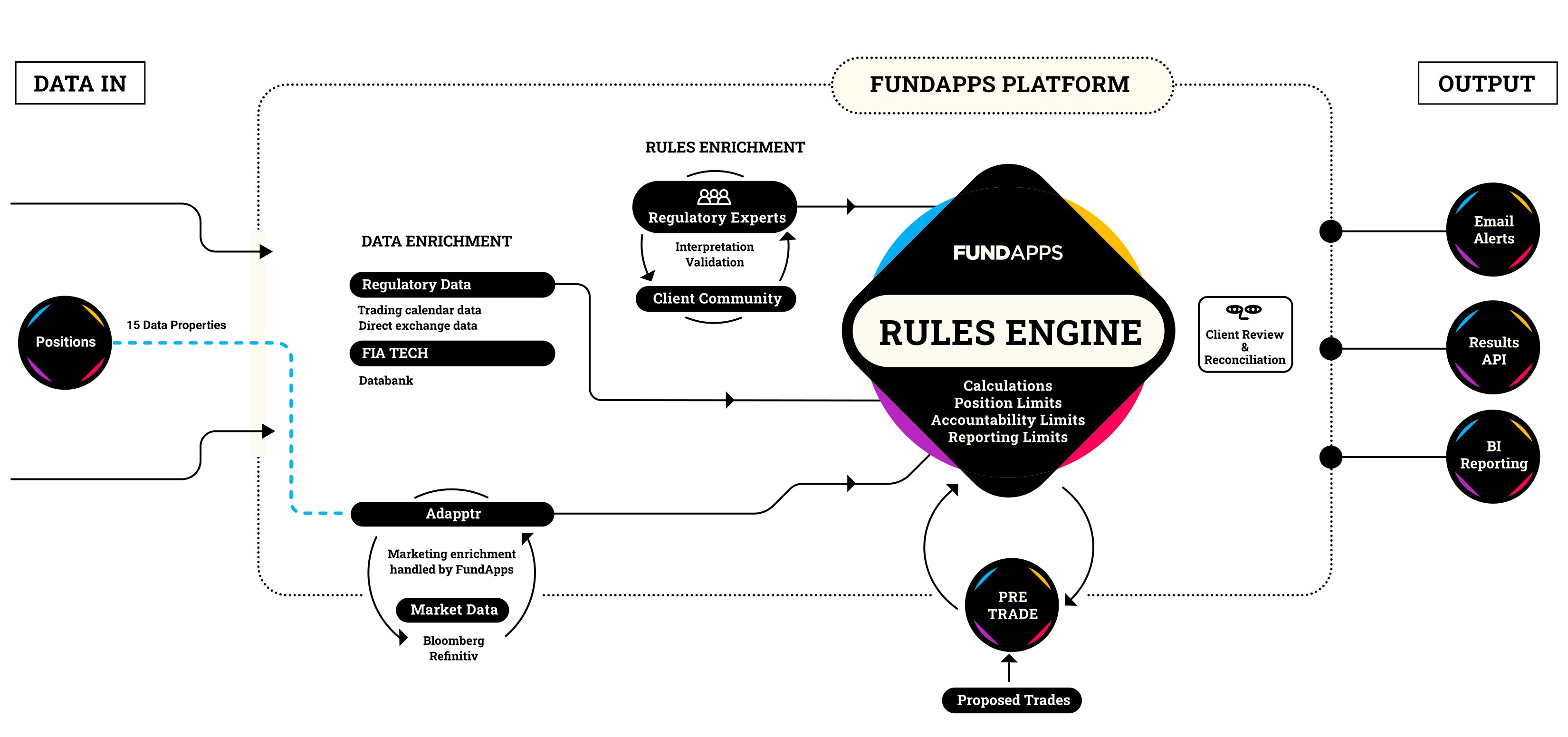
The Position Limits solution monitors derivatives limits imposed by exchanges and regulators across the globe. The diagram explains that.


FundApps' Composites service allows clients to...


Bring Your Own Data

If you have your own composition data, either from custom baskets, previously sourced ETFs or Indices you can upload them to us directly so we can join them up in your file.

FundApps Data Library

Tell us which composites you’re interested in, we’ll source data for you and make it available within the library for daily file enrichment.

Use ETF Proxies

Index data is  expensive. By using our data library or BYOD you’ll be able to use proxy instruments for instrument compositions saving money

Save time and effort 

Our service minimises the internal IT effort to collect, process and store complex instrument data. Let us handle the data while you review the results.

Leave complex data structuring to us

Our Composites service combines industry expertise with swaths of data. Be confident you're modelling composite instruments before disclosing.

Our Blogs

Why 'data-only' Shareholding Disclosure fails the defensibility test

Why 'data-only' Shareholding Disclosure fails the defensibility test

A data-only approach leaves shareholding disclosure exposed to defensibility gaps. Here’s why data alone won’t stand up to scrutiny.

Converging compliance: Why sanctions and Reverse CFIUS monitoring work better together

Converging compliance: Why sanctions and Reverse CFIUS monitoring work better together

How sanctions and outbound investment rules converge, why unified monitoring matters, and how FundApps helps firms manage risk across portfolios globally.

How a ‘Data-Only’ approach compromises shareholding disclosure from the start

How a ‘Data-Only’ approach compromises shareholding disclosure from the start

Shareholding disclosure compliance needs more than data feeds. Learn how jurisdiction rules, instruments, and workflows shape accurate, scalable monitoring.

SEC examination priorities: What they mean for Schedule 13D and 13G compliance

SEC examination priorities: What they mean for Schedule 13D and 13G compliance

The SEC’s examination priorities are putting new pressure on 13D and 13G compliance. This year's key enforcement and disclosure risks for compliance teams.

Sanctions Lists: Necessary, but not enough

Sanctions Lists: Necessary, but not enough

Sanctions lists are only the start. Learn how timely data, automation, and execution help firms reduce sanctions risk and respond to regulatory change faster.

The 50 Percent Rule: When one rule becomes many

The 50 Percent Rule: When one rule becomes many

How the 50 percent rule exposes where sanctions monitoring breaks down, from manual aggregation and static data to jurisdictional blind spots.